CENTRIC PARTS 122.40000 Drum 37666 3535 18B206
fits model: Civic. make: Honda. year: 1973–1979.
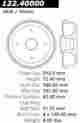
( Brand: Centric Parts ), ( Manufacturer Part Number: 122.40000 ), ( Quantity Sold: Sold Individually ), ( Placement On Vehicle: Rear ), ( Quantity Needed: 2; ), ( Engineering Name: Premium Brake Drum )
Review CENTRIC PARTS Drum Premium Honda fits CIVIC 1973–1979
Honda 1973-1979 DRM-18B206 122 40000 3535 Drum Brake Assembly for Honda Civic
Introduction:The Honda 1973-1979 DRM-18B206 122 40000 3535 Drum Brake Assembly is a critical component for the stopping power of your classic Honda Civic models produced between 1973 and 1979. In these vehicles, drum brakes were primarily used to provide effective braking performance. This article aims to provide a detailed product description for this crucial automotive part.
Description:1. Components inclusions: The Honda 1973-1979 DRM-18B206 122 40000 3535 Drum Brake Assembly includes various parts that work in unison to allow your vehicle to slow down and stop efficiently. This package comes with one complete drum brake assembly consisting of front brake drums, shoes, wheel cylinders, return springs, and other components needed for its operation.
2. Drum design and material: The brake drums are cylindrical cavities that house the brake shoes when the vehicle's brakes are not in use. They are made out of durable and heat-resistant steel to ensure they can withstand the intense heat generated during the braking process. The drums' inner surfaces are treated with a porous and textured coating to promote efficient friction contact with the brake shoes.
3. Brake shoes: These components connect to the wheel hub via the wheel cylinder assembly. They consist of two main parts - the backing plates and friction cones. The backing plate is a thick steel component that keeps the friction cones far away from the drum when the brakes are not applied. When you apply the brakes, the friction cones press against the drum surface, generating the necessary stopping force.
4. Wheel cylinders: The wheel cylinders are hydraulic cylinders that force the brake shoes against the drum when you press the brake pedal. These cylinders consist of a cylindrical body and two pistons, enabling them to press both shoes toward each other simultaneously when you engage the braking system.
5. Return springs: These components are essential to ensure that the brake shoes return to their original position when you release the brake pedal. Once the brake pressure is released, the return springs, which are located at the back of each brake drum, force the shoes back against a drum-mounted cam and restore the shoes to their resting position.
6. Maintenance and replacement: Regular maintenance, such as checking the brake pads and shoes for wear, is crucial to ensure that your vehicle's drum brake assembly functions correctly. However, the brake components, including the drums, shoes, wheel cylinders, and springs, will need replacement over the vehicle's lifetime. If you begin to experience issues like extended brake pedal travel, squeaking brakes, or reduced braking performance, it may be time to replace yourCivic's drum brake assembly.
Conclusion:The Honda 1973-1979 DRM-18B206 122 40000 3535 Drum Brake Assembly plays a vital role in the stopping power of your classic Honda Civic models. By detailed understanding the components that make up the drum brake assembly and their functions, you'll have a better appreciation for the complex design that allows your vehicle to stop safely and efficiently.
Pros and Cons of Buying a 1973-1979 Honda Civic (Model 18B206, Engine 3535, 40000 miles,drum brakes)
Pros:1. Affordability: The price range for a 1973-1979 Honda Civic with the specified specifications is relatively low compared to newer models, making it an affordable option for those on a budget.
2. Reliability: Honda is known for manufacturing reliable vehicles, and a used Civic from this era is likely to stand the test of time if properly maintained.
3. Fuel Efficiency: These older Civics are known for their impressive fuel economy, making them a smart choice for those looking to save on gas costs.
4. Vintage Appeal: The classic look of these vehicles is attractive to many car enthusiasts and collectors.
5. Simple Design: The simpler design and fewer computerized systems in older vehicles can mean fewer repairs and less diagnostic time.
Cons:1. Limited Technology: The lack of modern technology in these vehicles may not appeal to those who prefer modern comfort features.
2. Part Availability: Finding specific replacement parts for a 1973-1979 Honda Civic can be more challenging than finding parts for newer models, which might drive up repair costs.
3. Braking Performance: The drum brakes on this model may not provide the same stopping power as disc brakes, and their maintenance requirements can be more frequent.
4. Lack of Safety Features: These vehicles lack many modern safety features, so they may not be the best option for families or those who prioritize safety.
Conclusion:In conclusion, a 1973-1979 Honda Civic with the specified specifications presents both advantages and disadvantages. Despite its lack of modern amenities and safety features, the affordable price, reliability, fuel efficiency, vintage appeal, and simple design make it an attractive option for those looking for a dependable, economical vehicle. For those who value modern technology, comfort, and safety features, however, it may not be the best choice.
Recommendation:If you are interested in purchasing a 1973-1979 Honda Civic with drum brakes, consider thoroughly inspecting the vehicle's condition, especially the braking system, before making a final decision. If the vehicle is in good condition and meets your needs for affordability and reliability, it could make for a suitable purchase. However, if modern technology, safety features, and superior braking performance are important factors, you may want to explore other options. Ultimately, it's essential to weigh the pros and cons and determine which factors are most crucial for your personal situation.
Details:
24x7 online.
All products are covered by manufacturer's warranty.
part #: 12240000 prices
- $9.98-$49.09
specifications drumhardwarbrak:
- for models: Civic
- for makes: Honda
- for years: 1973-1979
- brand: Centric Parts
- mpn: 122.40000
- quantity sold: Sold Individually
- placement on vehicle: Rear
- quantity needed: 2;
- engineering name: Premium Brake Drum
Returns drumhardwarbrak:
- time: 30 Days
- paid by: Buyer
- policy: returns accepted
- type: Money back or exchange buyer's choice
- details: Restocking fee: No
Shipping drumhardwarbrak:
- handling: 3 days
- cost: $0.0
- type: Flat
General drumhardwarbrak:
- in stock: Yes
- condition: New
- Motors > Parts & Accessories > Car & Truck Parts > Brakes > Drums & Hardware
Payments drumhardwarbrak:
- PayPal
Ratings:
- Awesomeness 05-04-16
- Really fast ship 05-04-16
- Awesome 05-04-16
- 5-Star Seller. Nice Item As Described. Thank You. Why Withold Feedback? 05-04-16
- Horrible transaction.! 05-04-16
Seller drumhardwarbrak:
- zipcode: 11570
- city: Rockville Centre, New York
Offer drumhardwarbrak:
- quantity: 3
- Started: May 5, 2016, 3:52 am
- # bids: 0
- # Sold: 0
- best offer: false
Centric Parts 122.40000 Is Similar To:
- 0805890208891 0805890208891 Centric Parts 112.06690 Brake (34.8% similar) No modification required. Search by year. Search by model. Centric Parts 112. Ready to install. Search by make...(March 7th, 2017)
- 110.05740 Centric Parts Rear Brake Shoes Nissan Frontier Pathfinder And Van (39.7% similar) ...(August 2nd, 2018)
- 111.05170 Centric Parts 805890227489 (35.9% similar) Asbestos-free friction compounds are specially formulated and Dino tested to meet or exceed. Each Centric premium brake shoe includes all...(June 7th, 2019)
- 111.05710 Centric Parts New Brake Shoes Fits Nissan Jy (44.4% similar) ...(October 13th, 2018)
- 111.07650 Centric Parts Brake Shoe Set Dac 805890028987 (41.2% similar) ...(June 29th, 2019)
- 111.09280 Centric New Brake Shoe Set Rear For Honda 805890385530 (38.6% similar) Each warranty gives you specific rights, and may have other rights which vary from state. The manufacturers warranty shall be exclusive remedy for any such product defect or failure. Please for any questions. Some manufacturers require that you register your product to activate its warranty...(May 21st, 2018)
- 117.39005 Centric Parts Parking Brake (39% similar) For gm, ford, dodge, Chrysler, honda, Toyota, Nissan, Subaru, Volvo and more. Please carefully pack and ship the item prepaid insured. Centric Parts brakes, cooling, starters, alternators, belts, hoses, suspension, steering, exhaust and more...(November 19th, 2017)
- 117.39006 Centric Parts Parking Brake Hardware Kit (44.3% similar) Most Parts ship within 24 hours. Centric brake pads such as the disquiet line of premium metallic ceramic and extended wear formulas provide superior performance quality value. Stop tech Centric ultra performance division is a leading innovator of world class brake components and systems for ...(April 27th, 2018)
- 117.91028 Centric Parts Disc Brake Hardware Front Bmw Kit 805890753735 (35.8% similar) Fitment information may not be available for all products and those without will have a compatibility link. Actual item may vary. Buyer pays return shipping. Brake hardware type kit disc quantity sold as. This product ships directly from the manufacturer...(October 30th, 2018)
- Kit Kit-brake Centric Hardware Shoe Brake 118.63012 Drum Rear (28.2% similar) Centric continually innovates significant improvements to brake technology for the street and track, having earned four patents along the way. Drum brake hardware kit brake shoe hardware kit rear Centric 118...(February 26th, 2015)
- 118.11003 Centric Parts Drum Brake (43.5% similar) ...(November 17th, 2017)