WEBCO B2288101C Front Brake Shoe Drum Wheel Cylinder Spring Adjuster
fits make: Chevrolet. year: 1955–1957.
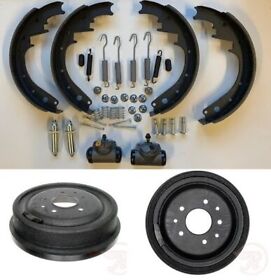
( Brand: Webco ), ( Manufacturer Part Number: B2288101C ), ( Placement On Vehicle: Left Right Front ), ( Type: Brake Drum ), ( Features: Includes Shoes And Hardware ), ( Items Included: Brake Shoes Wheel Cylinder Spring Kit Manual Adjuster ), ( Vintage Part: Yes ), ( Bolt Pattern: 5 X 4.75 In 5 X 120.65 Mm )
Review WEBCO Ake Shoe Drum Wheel Cylinder Spring Adjuster Chevrolet Front fits 1955–1957
Chevrolet 1955-1957 Front Brake System Components - Brake Shoe, Drum, Wheel Cylinder, and Adjusters
Introduction:The brake system is a crucial component of every vehicle, ensuring safe and reliable stopping power. For Chevrolet cars manufactured between 1955 and 1957, maintaining the proper functionality of the front brake system necessitates the use of authentic and high-quality replacement parts, specifically the brake shoe, drum, wheel cylinder, and adjusters. In this paragraph, we'll delve into a detailed description of each component, allowing you to understand their functions and why they must be in excellent condition for your classic Chevrolet.
Brake Shoe:The brake shoe is a key element in the drum brake system found in the front suspension of 1955-1957 Chevrolet vehicles. These shoes are fitted against the insides of the drum when the brake pedal is pressed. As the pressure from the brake pedal is transmitted through the wheel cylinder and its pistons, the brake shoes press against the drum, inducing friction that slows down and eventually stops the vehicle. Over time, brake shoes wear out due to repeated use and contact with the drum, demanding replacement.
Drum:The brake drum is a hollow cylindrical component that surrounds the brake shoe on the Chevrolet car's wheels from 1955 to 1957. It is responsible for the conversion of rotational kinetic energy from the turning wheels into compressive force upon the brake shoes when the brakes are applied. The drum houses the brake shoes, and the friction generated from the contact between the shoes and the drum results in a stopping force. Properly maintaining the brake drum and replacing it when necessary is essential to ensure optimal brake performance and longevity.
Wheel Cylinder:The wheel cylinder in a 1955-1957 Chevrolet serves as a hydraulic actuator to press the brake shoes against the drums effectively. It is a critical component of the drum brake system and contains two or more pistons, which press against the brake shoes when the brake pedal is depressed. The application of hydraulic pressure from the brake master cylinder causes the wheel cylinder to expand, pushing the pistons outward. This crucial movement results in the engagement of the brake shoes with the drum, generating the frictional force required to slow and stop the vehicle.
Adjusters:Brake shoe adjusters play a role in maintaining the proper positioning and centering of the brake shoes with respect to the drums in 1955-1957 Chevrolet vehicles. In older drum brake systems like the one used in these vehicles, brake shoes could potentially rub against the drum linings, causing noise and premature wear. To prevent this, manufacturers included adjusters that allow for fine-tuning the clearance between the shoes and the drums. Over time, adjusters can wear or malfunction, making it essential to replace them as soon as issues arise, ensuring proper brake operation.
Conclusion:The brake shoe, drum, wheel cylinder, and adjusters are pivotal components in the drum brake system used in Chevrolet vehicles from 1955 to 1957. In summary, the brake shoe generates friction when in contact with the drum, which slows and stops the vehicle. The brake drum is a cylindrical component that the brake shoes press against when the brakes are applied, converting rotational force into stopping force. The wheel cylinder transfers hydraulic pressure to the brake shoes, effectively engaging them with the drums, and brake shoe adjusters maintain the correct positioning and centering of the shoes. Updated brake components can help ensure safe and consistent braking and increase the lifespan of your classic Chevrolet.
Buying new brake components for a classic car like a 1955-1957 Chevrolet can be an important decision for ensuring the safety and reliable operation of the vehicle. When considering purchasing new brake shoes, drums, wheel cylinders, or spring adjusters, it's important to weigh the pros and cons before making a final decision.
**Brake Shoes:** Pros:1. Enhanced stopping power: New brake shoes provide consistent and reliable braking performance, ensuring the safety of the vehicle and its passengers.
2. Improved pedal feel: New brake shoes help provide a firm and consistent pedal feel, which contributes to a more enjoyable driving experience.
Cons:1. Cost: Brake shoes can be relatively expensive, especially for classic cars where new, OEM parts may be hard to find.
2. Labor intensive: Installing new brake shoes requires disassembling the brake system, which can be a time-consuming and labor-intensive process.
**Drums:** Pros:1. Durability: New drums provide the required rigidity and leverage to effectively stop the vehicle.
2. Smoother operation: New drums can lead to smoother operation of the brake system, reducing pedal pulsation and vibration.
Cons:1. Cost: Replacing the drums can be costly, especially if new, OEM parts are required.
2. Labor: Installing new drums also requires significant labor, making the overall cost of the job more expensive.
**Wheel Cylinders:** Pros:1. Improved stopping power: New wheel cylinders ensure consistent and even brake application, leading to improved stopping power.
2. Safety: Worn or damaged wheel cylinders can result in dangerous brake system failures, making replacing them a crucial safety concern.
Cons:1. Cost: Wheel cylinders can be relatively expensive, especially for classic cars with hard-to-find parts.
2. Labor: Installing new wheel cylinders requires significant labor, which increases the overall cost of the job.
**Spring Adjusters:** Pros:1. Proper adjustment: New spring adjusters ensure proper brake shoe adjustment, leading to improved stopping performance and safety.
2. Long-lasting: Spring adjusters are relatively durable components that do not wear out as frequently as other brake parts.
Cons:1. Cost: Replacing a spring adjuster is typically not a major expense, but the labor cost for the job can add up.
**Conclusion:**While the cost and labor involved in replacing brake shoes, drums, wheel cylinders, and spring adjusters on a 1955-1957 Chevrolet can be significant, the safety and performance benefits make these repairs an essential part of maintaining the vehicle. By thoroughly assessing the condition of the existing components and considering the repair or replacement of each one as needed, you can ensure your classic Chevrolet safely and reliably meets the road ahead. In instances where price is a major concern, consider shopping around for aftermarket parts or rebuilding existing components rather than purchasing new ones.
Details:
This is a new production brake kit for the FRONT of Chevrolet model's. Premium brake shoe. Shoe spec: 11 x Wheel cylinder links - 4. Spring kit with hold down parts. New condition.
specifications drumhardwarbrak:
- for makes: Chevrolet
- for years: 1955-1957
- brand: Webco
- mpn: B2288101c
- placement on vehicle: Left Right Front
- type: Brake Drum
- features: Includes Shoes And Hardware
- items included: Brake Shoes Wheel Cylinder Spring Kit Manual Adjuster
- vintage part: Yes
- bolt pattern: 5 X 4.75 In 5 X 120.65 Mm
Rating:
- rating: 99.5%
- # feedbacks: 8343
Returns drumhardwarbrak.com:
- paid by: BUYER
- time: 30
- policy: returns accepted
Offer drumhardwarbrak.com:
- sold: 0
- Started: September 28, 2022, 1:50 pm
- options: Ship-to-home
- best offers: no
- quantity: 1
General drumhardwarbrak.com:
- condition: New
- in stock: Yes
- Motors > Parts Accessories > Car Truck Parts Accessories > Brakes Brake Parts > Brake Drums
Shipping drumhardwarbrak.com:
- type: FIXED
- type: Standard Shipping
- cost: $0.00
Payments drumhardwarbrak.com:
- Credit Card
- Wallet
Webco B2288101C Is Similar To:
- B1052482 Webco Nissan Nv Chevrolet City Express Rear Brake Shoes Spring (25.7% similar) Brake shoe specs: 228MM x 35MM applications: chevrolet: city experiencing: NV200 kit components: premium set spring note: photo is a file and may not be your actual part. For larger items, they are shipped USPS, FedEx or ups to the continental us only. Many cars are now 40 to 80 years old and may ...(March 6th, 2019)
- B517094 Webco Honda Civic Brake Drums Shoes Spring Kit (33.6% similar) 7l brake drums shoes spring kit this is a set of rear shoes. For larger items, they are shipped USPS, FedEx or ups to the continental us only. Many cars are now 40 to 80 years old and may have been modified over. As a rule of thumb please look at your existing part base line. Brake shoe specs: 200 x...(October 18th, 2018)
- B51947 Webco Dodge Neon Rear Brake Drums Shoes Spring Stud Only (34.3% similar) As a rule of thumb please look at your existing part base line. For larger items, they are shipped USPS, FedEx or ups to the continental us only. Many cars are now 40 to 80 years old and may have been modified over. 28 applications: dodge: neon 5 lug only kit components: premium brake shoe set drum ...(September 19th, 2018)
- B51947642 Webco Dodge Neon Frt Rotors Pads Rear Drums Shoes Wheel (21.1% similar) Dodge neon frat rotors pads rear drums shoes wheel cylinder springs this is a set of front brake pads, rotors, shoes, drums, cylinders and spring kit. As a rule of thumb please look at your existing part base line. 28 applications: dodge: neon 5 lug only kit components: premium brake shoe set drum ...(September 24th, 2018)
- B55178 Webco Brake Shoe Drum Plus Hardware Rear Kit Set Fits (39.4% similar) Many cars are now 40 to 80 years old and may have been modified over. Brake shoe drum plus hardware rear kit set fits Toyota corolla this is a of brakes shoes with and spring that will fit various model's. 24 applications: Toyota: corolla chevrolet: prism Geo: kit components: premium brake shoe set ...(October 22nd, 2018)
- B55178056 Webco Corolla Prizm Brake Disc Rotors Pads Drums Shoes Cylinders (33.1% similar) Corolla prim brake disc rotors pads drums shoes cylinders springs this is a set of front and rear drum brakes. Many cars are now 40 to 80 years old and may have been modified over. 24 applications: Toyota: corolla Geo: prism kit components: premium brake shoe set drum spring kit ceramic pads brake ...(May 7th, 2018)
- B57669 Webco Honda Civic Drums Brake Shoes Wheel Cylinders Plus Hardware (41.6% similar) Many cars are now 40 to 80 years old and may have been modified over. Honda civic drums brake shoes wheel cylinders plus hardware rear this is a set of shoes, drums, and spring kit. 38 applications: Honda: civic kit components: premium brake shoe set drum spring kit wheel cylinder note: photo is a ...(October 18th, 2018)
- B61710321 Webco Brake Shoe Drum Plus Hardware Rear Kit Fits Honda (38% similar) Many cars are now 40 to 80 years old and may have been modified over. For larger items, they are shipped USPS, FedEx or ups to the continental us only. This is a set of rear drum brakes shoes with brake and spring kit that will fit various model's. 38 applications: Honda: ACCORD2006 civic GX only ...(March 29th, 2018)
- B631024 Webco Xterra Nissan Frontier Ceramic Pads Rotor Drum Shoes Spring (28% similar) For larger items, they are shipped USPS, FedEx or ups to the continental us only. Many cars are now 40 to 80 years old and may have been modified over. Brake shoe specs: 295 x 50MM applications: Nissan: frontier 4 ONLY2000 Terra - all kit components: premium set drum set ceramic pads brake rotor set...(August 14th, 2018)
- B739006 Webco Mazda Protege Brake Drums Shoes Plus Springs (34.1% similar) Mazda protege brake drums shoes plus springs this is a set of rear shoes, and spring kit. As a rule of thumb please look at your existing part base line. 32 applications: Mazda: protect components: premium brake shoe set drum spring note: photo is a file and may not be your actual part. For larger ...(September 4th, 2018)
- B747117 Webco Focus Rear Brake Shoes Drums With Wheel Bearings Hardware (41.9% similar) Brake shoe specs: 8 x for larger items, they are shipped USPS, FedEx or ups to the continental us only. As a rule of thumb please look at your existing part base line. Focus rear brake shoes drums with wheel bearings hardware this is a set of shoes, and spring kit. 50 applications: ford: focus kit ...(June 26th, 2018)